
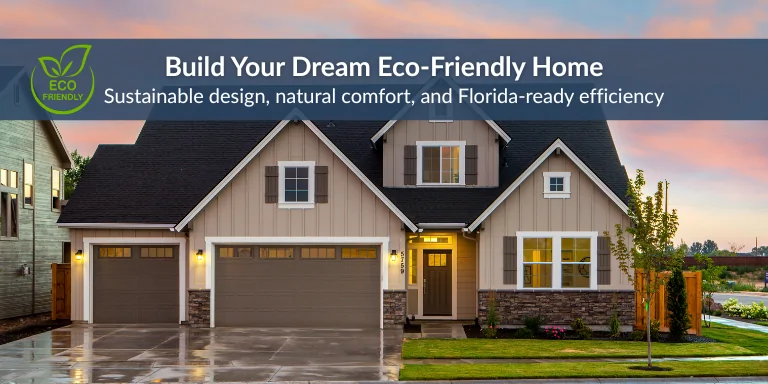
Designing an eco-friendly home is no longer a niche trend—it’s a practical and thoughtful choice for homeowners who want long-term comfort, lower energy bills, and a healthier environment. In areas like Gainesville and the broader North Florida region, the conversation around sustainable living continues to grow, especially as homeowners face humid summers, intense heat, heavy rain seasons, and the occasional hurricane-strength storm. Creating a home that works with the climate—not against it—becomes essential.
If you’re planning a custom home and want it to be as eco-friendly as possible, the good news is that sustainable design doesn’t require dramatic lifestyle changes or ultra-expensive upgrades. It’s about making smart decisions from the very beginning that support efficiency, durability, and a lighter environmental footprint.
Below is the practical guide that blends eco-friendly building principles, North Florida climate considerations, and realistic tips you can apply when designing a custom home.
Start With a Strong Foundation: Passive & Climate-Sensitive Design
Before adding fancy technology or high-efficiency gadgets, an eco-friendly home starts with the fundamentals—how it’s oriented, how it breathes, and how it handles North Florida’s climate.
Key passive design considerations:
- Orientation for shading & sunlight: Position main living areas to avoid harsh afternoon sun from the west while allowing softer light during the day. This reduces cooling loads naturally.
- Deep roof overhangs and covered porches: Very common in Gainesville and nearby towns, these architectural elements provide shade, reduce indoor heat gain, and protect against heavy rains.
- Proper cross-ventilation: Homes in North Florida benefit from designs that allow natural breezes to flow through the home, reducing dependency on HVAC systems during milder months.
- Moisture management: Humidity is a real challenge here. Vapor-permeable wall systems, good drainage planning, and well-sealed building envelopes prevent mold and moisture issues.
These passive elements set the stage for the rest of your eco-friendly decisions.
Invest in High-Quality Insulation & Air Sealing
Even the best HVAC system struggles if your home leaks air. Insulation is one of the most powerful and cost-effective ways to improve efficiency.
What to prioritise:
- Continuous exterior insulation to create a thermal barrier
- High-performance windows suited for warm climates
- Proper air-sealing around doors, vents, and attic spaces
- Radiant barriers or reflective roof materials to handle Florida heat
A well-insulated home doesn’t just stay cooler—it maintains indoor comfort with less strain on your HVAC system, lowering energy consumption year-round.
Design Compact, Efficient Spaces With Purpose
Eco-friendly living isn’t about building tiny homes—it’s about designing smart, intentional spaces.
A simpler, well-thought-out floor plan:
- Reduces material consumption
- Lowers heating/cooling requirements
- Supports better air circulation
- Makes long-term maintenance easier
For North Florida’s subtropical climate, homes that avoid unnecessary wings, complex rooflines, or irregular shapes are naturally more energy-efficient and more resilient during storms.
Upgrade to Smart Thermostats and Efficient HVAC Systems
North Florida homeowners rely heavily on air conditioning. This makes HVAC choices one of the biggest opportunities for energy savings.
Smart eco-friendly upgrades include:
- Programmable or smart thermostats to control temperature by zone
- High-efficiency heat pumps (excellent for Florida, providing both heating and cooling with lower energy use)
- Variable-speed air handlers that adjust output based on real-time needs
- Proper duct sealing and placement to prevent air loss
Smart thermostats alone don’t make a home eco-friendly—the real benefit comes when they work together with an efficient HVAC system and a well-insulated building envelope.
Energy-Efficient Fixtures & Appliances
Sometimes the small upgrades bring the biggest long-term payoff.
Choose:
- LED lighting for every indoor and outdoor fixture
- ENERGY STAR appliances (especially refrigerators and washers, due to long daily runs)
- Low-flow or WaterSense fixtures to save water without affecting pressure
- Aerated faucets and dual-flush toilets for reduced water usage
These fixtures require zero lifestyle changes while lowering monthly bills.
Use Nature to Your Advantage: Landscaping That Works for the Climate
Eco-friendly home design extends outdoors—and in Florida, landscaping plays a major role in cooling, shading, and stormwater management.
Smart landscaping ideas for Gainesville & North Florida:
- Plant native shade trees like Live Oaks, Southern Magnolias, or Red Maples to naturally cool your home
- Use drought-tolerant shrubs that thrive with minimal maintenance
- Create wind-break rows to protect the home from storm winds
- Install permeable pathways or driveways to handle heavy rains
- Add rain gardens that manage runoff effectively
Native plants not only save water but also support local wildlife and require fewer chemicals.
Consider Solar-Ready Roofing and Renewable Options
The North Florida region sees abundant sunshine, making solar systems a practical and increasingly popular addition to eco-friendly homes.
Even if you’re not ready for panels today, designing a solar-ready roof keeps your options open. This includes:
- South- or southwest-facing roof planes
- Minimal shading from trees
- A roof pitch suitable for solar
- Pre-installed conduits for wiring
Pairing solar with battery storage can offer resilience during storms or grid outages—a growing concern in many Florida communities.
Capture and Use Water Wisely
Water conservation matters, especially in regions where heavy rains can quickly shift to dry spells.
Add:
- Rainwater harvesting systems for irrigation
- Permeable pavers to reduce runoff
- Smart irrigation controllers based on soil moisture
- Gutter systems designed to divert water safely away from foundations
These features help maintain healthy landscaping and reduce strain on municipal systems.
Build for Durability & Storm Resilience
Eco-friendly homes in North Florida must also be resilient homes.
Consider:
- Impact-resistant windows
- Reinforced roof structures
- Moisture-resistant and termite-resistant building materials
- Elevated foundations in flood-prone pockets around Gainesville
- Metal roofing (long-lasting and reflective)
A home built to handle local weather automatically performs better over time and requires fewer repairs—making it more sustainable.
Looking to Build an Eco-Friendly Custom Home in Gainesville?
Designing an environmentally responsible home is a long-term investment in comfort, efficiency, and quality of life. For homeowners comparing options for new home construction in Gainesville, sustainable design is becoming a major priority. Whether you’re early in the planning phase or ready to explore layout options, working with a builder who understands North Florida’s climate, soil conditions, energy challenges, and local building codes makes the journey easier.
At Sparks Construction, we help homeowners design custom homes that blend beautiful architecture with smart, sustainable choices. If you’d like guidance or want to explore your options, you can reach our team at 386-755-9314.