
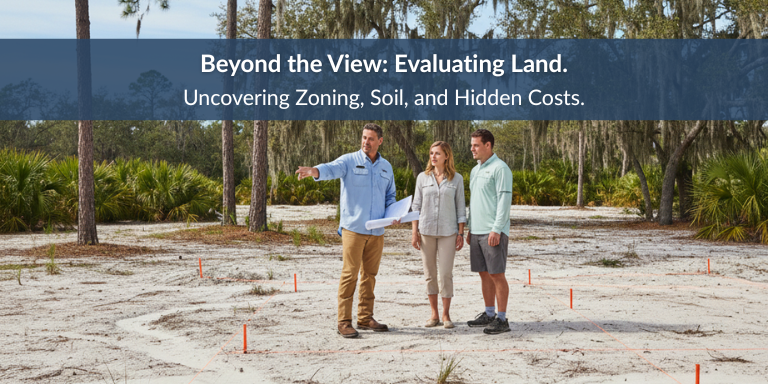
Finding the perfect plot of land is often the most exciting part of the custom home journey. It’s the canvas where your future living room, backyard, and memories will sit. However, in North Florida, a beautiful view doesn’t always equal a buildable lot.
Whether you are looking at a wooded acreage in Columbia County or a lot within a Lake City subdivision, what lies beneath the surface (and in the zoning paperwork) matters just as much as the scenery.
If you are planning to build in 2026, understanding how to evaluate land is the best way to protect your budget and ensure your vision is feasible. Here is a practical guide on what to look for before you sign the closing papers.
Understand the Zoning and Deed Restrictions
Before finalizing the property, you need to know exactly what you are allowed to build on it. A parcel might look perfect for a sprawling ranch with a detached workshop, but local regulations could say otherwise.
Key things to check:
- Setbacks: How far must the house be from the road and property lines? On smaller lots, setbacks can significantly reduce the size of the home footprint you can build.
- Zoning Classifications: Is the land zoned strictly residential, or is it agricultural? This affects everything from property taxes to whether you can have a pole barn or livestock.
- Deed Restrictions & HOAs: Even if the county allows it, a subdivision’s covenants might not. Check for square footage minimums, exterior material requirements (like brick or stucco), and restrictions on outbuildings.
Evaluate the Topography and Soil Conditions
In Lake City and the surrounding areas, the terrain is generally flat, but that doesn’t mean it’s simple. The soil composition and water table levels in Florida can vary wildly from one acre to the next.
- Drainage and Flood Zones: Florida weather is unpredictable. You need to know where the water goes when we get heavy summer rains. If a lot is at the bottom of a slope or in a low-lying area, you may need to bring in significant amounts of fill dirt to elevate the home pad. This ensures your custom home foundation stays dry, but it also adds to your site preparation costs. Always check the FEMA flood maps. Building in a flood zone doesn’t mean you can’t build, but it will affect your insurance rates and construction requirements (such as stem wall height).
- Soil Quality: What looks like solid ground can sometimes be soft sand or clay. Before finalizing a purchase, it is often wise to have a basic soil test done. This confirms the ground can support the weight of the structure without requiring expensive engineered foundations.
The Reality of Utilities and Infrastructure
When buying raw land, one of the biggest variables in your budget will be utilities. A lot that seems like a “steal” might end up costing more in the long run if it lacks infrastructure.
- Water and Septic Planning: Homes built within city limits typically connect to municipal water and sewer, which is a straightforward process but often includes impact fees. In more rural areas, a private well and septic system is usually required. Septic costs depend on a percolation test that measures how well the soil absorbs water, while well costs are influenced by how deep drilling must go to reach a reliable water source in North Florida.
- Power and Internet: Don’t assume power is easily accessible just because there is a pole down the road. Running power lines several hundred feet to a secluded home site can be surprisingly expensive. Similarly, if you work from home, verify that high-speed internet providers actually service that specific address.
Accessibility and Orientation
How your home sits on the land is just as important as the land itself. Experienced custom home builders in Lake City will always look at “solar orientation”—how the sun moves across the property.
In Florida, you generally want to minimize direct sunlight hitting the largest windows in the late afternoon to keep cooling costs down. Orienting your back porch or lanai to face north or south, rather than due west, can make your outdoor living space much more enjoyable during the summer.
Access Considerations:
- Driveways: A long, winding driveway is romantic, but concrete or asphalt costs add up per linear foot.
- Tree Clearing: We love our oaks and pines, but clearing a heavily wooded lot requires heavy equipment. You’ll want to identify which trees to save for shade and which must go to protect the foundation.
Why You Should Walk the Lot with a Builder
Real estate agents are experts in buying and selling land, but builders are experts in developing it.
One of the most valuable steps you can take is to have a builder walk the lot with you during your “due diligence” period. A builder can spot red flags that don’t appear on a survey—like a low spot that will hold water, or a tree canopy that will interfere with your roofline.
At Sparks Construction, we have been navigating these local challenges since 2004. With over 200 custom homes built, we have seen nearly every type of land condition Columbia County has to offer. We can help you decide if the land fits your total project budget.
Making the Right Land Decision
Buying land is a commitment. The best way to evaluate a lot is to look beyond the view and understand the logistics of turning that dirt into a driveway, a foundation, and a home.
If you are looking for home builders in Lake City FL who can help you evaluate a potential homesite or discuss your future floorplan, we are here to help. We believe in transparent communication from the very first site visit to the final walk-through.
Ready to discuss your custom home project? Call us at 386-755-9314 let’s look at your options together.