
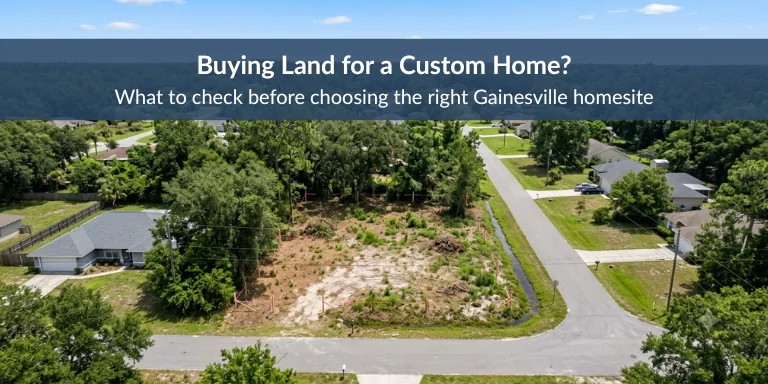
You drive past a wooded lot on the edge of town, or scroll through a listing for a few acres out near Newberry or High Springs, and something clicks. The price feels right. The setting is beautiful. You can already picture the house sitting there.
Before you make an offer, though, it’s worth slowing down. The land itself decides a great deal about what you can build, how much it will cost, and whether the home you have in mind is even possible on that particular piece of ground. Some of the most expensive surprises in custom home building show up long before the foundation is poured. They start with the lot.
The Land Shapes the House, Not the Other Way Around
A lot of buyers design their dream home first and then go looking for somewhere to put it. We understand the excitement, but that order can create problems. Two lots that look nearly identical from the road can carry very different costs once you account for what it takes to actually build on them.
Slope, soil, drainage, tree cover, and access all influence the design. A home that sits comfortably on a flat, cleared parcel may need an entirely different foundation approach on a lot that drops off toward a low spot. The smarter path is to let the land inform the design from the start, so you are working with the site instead of fighting it.
Is the Property Actually Buildable?
“Buildable” means more than “empty and for sale.” A parcel can be perfectly legal to own and still be difficult, or costly, to build on.
A few things worth confirming early:
- Whether the lot has legal, permanent road access
- Whether there is enough usable, high ground to place the home
- Whether the soil can support a standard foundation
- Whether the parcel is large enough once setbacks are applied
Setbacks are one of the most overlooked pieces here. Every jurisdiction requires the home to sit a certain distance from property lines, roads, and sometimes wetlands or water. On a smaller or oddly shaped lot, those setbacks can shrink your usable building area far more than the total acreage suggests. We have walked plenty of properties where the buildable footprint was much tighter than the owner expected.
Zoning matters too, but usually as a quick confirmation rather than a deep concern. It’s simply worth checking that the property allows a single-family residence and that nothing unusual applies.
Utilities Can Make or Break the Budget
This is where budgets often move the most, so it deserves attention.
In parts of Gainesville you’ll have municipal water and sewer at the street. Move a little further out into North Florida and you’re often looking at a private well and a septic system instead. Septic in particular depends on a soil percolation test, and not every lot passes cleanly. Sites with high water tables or poor drainage can require engineered systems that cost significantly more than a standard install.
Then there’s power. If the nearest utility pole is a good distance from your building site, running electricity in can be a real expense. Internet access is worth checking as well, especially on rural parcels, since coverage varies more than people assume.
None of this should scare you off a property. It simply needs to be understood before you commit, so the number in your head matches the number on paper.
Flood Zones, Drainage, and What the Water Does
North Florida gets rain, and how a site handles that water affects both construction and long-term ownership. A lot in a designated flood zone isn’t automatically off the table, but it can mean elevated construction, additional engineering, and flood insurance, all of which change your numbers.
Even outside mapped flood zones, drainage matters. Standing water, low areas, and the way runoff moves across a site can complicate the build. Walking a property after a heavy rain tells you more than a dry-day visit ever will.
Easements and Restrictions People Miss
An easement gives someone else the right to use part of your land, often a utility company or a neighbor needing access. It might restrict where you can build or place a driveway. These are recorded on the property but easy to overlook if you aren’t looking for them.
If the lot sits within an HOA or a deed-restricted community, there may be rules on home size, exterior materials, or setbacks that go beyond county requirements. Better to know those before you fall for a design the community won’t allow.
The Costs Buyers Forget: Trees, Grading, and Site Prep
A heavily wooded lot is gorgeous, and clearing it costs real money. So does grading a site to drain properly, hauling in fill, and building a driveway. These site preparation costs rarely show up in a land listing, yet they can add meaningfully to a project. Factoring them in early keeps your overall budget honest.
This is also where a cheaper lot can quietly become the expensive one. A parcel priced well below a comparable one nearby might need heavy clearing, extra grading, an engineered septic system, or a long utility extension to reach the building site. Once you add that work in, the total project can land higher than it would have on a lot that cost more up front.
We’re not saying to avoid affordable land. We’re saying to look past the sticker price and understand the full cost of getting a homesite ready to build on. The best lot isn’t the cheapest one on paper. It’s the one that lets you build the home you actually want without a string of expensive compromises along the way.
Quick Lot Evaluation Checklist Before You Buy
Before you make an offer, it helps to run through a short site evaluation in your head, or better yet, on paper. A few minutes here can save months of frustration later.
- ✓ Does the lot have legal, permanent road access?
- ✓ Is there enough high, usable ground once setbacks are applied?
- ✓ What are the utility options: city water and sewer, or well and septic?
- ✓ Has a soil or perc test been done, or will one be needed?
- ✓ Is the property in or near a mapped flood zone?
- ✓ Are there recorded easements affecting where you can build?
- ✓ Does an HOA or deed restriction limit your design?
- ✓ What will clearing, grading, and site prep realistically cost?
If you can’t answer a few of these with confidence, that’s usually a sign to pause before signing anything.
Talk to a Builder Before You Buy
Most of these issues are solvable. They’re just far cheaper to solve before you own the land than after.
We’ve been building custom homes across North Florida since 2004, and walking a property with a buyer before they purchase is one of the most valuable things we do. It takes an afternoon and can save you from a costly mistake.
Over the years we’ve walked everything from wooded North Florida lots to parcels in rural Alachua County and homesites in newer developments closer to town. Each one carries its own quirks, and knowing them early is what keeps a custom home project on budget and on schedule.
If you’ve found a piece of land you’re serious about, let us take a look before you commit. A short walk of the property with an experienced home builder often surfaces the things a listing never mentions, and it costs you nothing but an afternoon. Call us at 386-755-9314 and we’ll help you understand what that homesite can really support. Getting that clarity before you buy is one of the smartest steps you can take toward building on your own land with confidence.