
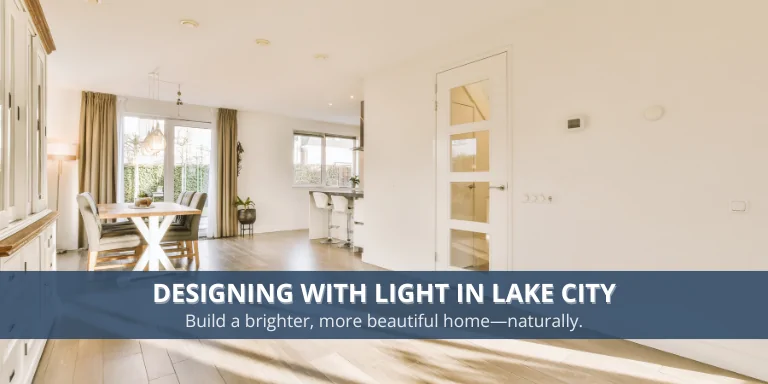
If you’ve spent any time in Lake City, you already know the sun isn’t shy here. Florida’s natural light is one of the most underutilized resources when people are planning a custom home—and in our experience building 200+ homes since 2004, it’s one of the first things we talk about with clients during the design phase. Done right, it can make your home feel larger, reduce your energy bills, and genuinely improve how you feel inside the space day to day.
Over the past 20 years, we’ve refined how we approach this across every build—and a few things consistently make the biggest difference. Here’s how we approach natural light design when building custom homes in Lake City, FL.
Home Orientation: The First Step in Natural Light Design
Everything else builds off this decision. Before windows, finishes, or floor plans, home orientation determines how much daylight you’ll work with—and when.
South-facing windows pull in consistent light throughout most of the day, so those tend to work well for living rooms and kitchens. East-facing windows bring in cooler morning light, which is ideal for bedrooms or a breakfast nook. West-facing windows get direct afternoon sun, and in Florida, that can mean heat gain—so we often plan overhangs or shading elements accordingly.
Getting it right at this stage saves real headaches down the road.
How Open Floor Plans Improve Natural Light in Custom Homes?
One thing we see often when building custom homes in Lake City: homeowners want the bright, airy feel but don’t realize how much walls get in the way of that. Solid partitions stop light cold. Open floor plans, on the other hand, let daylight travel across connected spaces instead of being trapped in a single room.
Higher ceilings amplify this effect. Wide, open hallways help too. It’s not always about adding more windows—sometimes it’s about giving existing light more room to move.
Window Size and Placement: Getting More From Every Room
Standard builder windows are fine, but when you’re designing a custom home, you have the chance to think beyond the defaults.
A few options worth considering:
- Large picture windows in gathering areas—they bring in the most light and, in Lake City, often frame a nice view of mature trees or a yard.
- Clerestory windows positioned high on a wall let daylight in without compromising wall space or privacy below.
- Transom windows above doorways are a simple way to add light to transitional spaces without major structural changes.
- Corner windows catch light from two directions, which can make a smaller room feel noticeably bigger.
One practical note: whatever windows you choose, make sure they’re energy-efficient with low-E glass. Florida’s heat is real, and you want daylight without the thermal load that comes with it. These aren’t just design preferences—they’re decisions we’ve worked through on dozens of builds across Columbia County, and the difference in how a finished home feels is noticeable.
How Interior Finishes Affect Natural Light (More Than You’d Think)
We’ve seen homes with great window placement that still felt dim—usually because dark finishes were absorbing the light instead of bouncing it around. Lighter walls and ceilings reflect daylight deeper into a space. Glossy tile or polished hardwood floors pick up and redistribute light in a way that matte surfaces simply don’t.
Mirrors placed across from windows are one of the most effective tricks we know. It sounds almost too simple, but we’ve seen it make a real difference—especially in rooms that don’t get much direct sun.
Skylights and Solar Tubes: Natural Light for Every Room
Bathrooms, hallways, interior closets—these are the spaces that rarely get natural light through traditional windows, but that doesn’t mean they have to stay dim. Skylights are a bigger investment but deliver dramatic results. Solar tubes are a more budget-friendly option; they use a reflective shaft to channel sunlight into a room and are easy to plan during the home construction phase—and something we build into our process here in Lake City regularly.
Both are worth discussing early in the design process rather than as afterthoughts.
Managing Shade and Sunlight in Florida Custom Homes
Maximizing natural light doesn’t mean letting the full Florida sun blast through unchecked. Extended roof overhangs, covered porches, pergolas, and even well-placed trees can filter light so it feels comfortable rather than harsh. We think about shade as part of the lighting strategy, not separate from it.
Designing Your Floor Plan Around Your Daily Routine
A home office with harsh afternoon glare makes focused work harder. A bedroom that gets strong direct morning light can disrupt sleep. When we’re working through floor plan options with clients, we always talk through daily routines—who works from home, when people wake up, where the family spends most of their time. That conversation ends up shaping more of the floor plan than most people expect.
Lake City’s climate is genuinely an asset when you’re building a custom home—if you plan for it. Most of what makes the difference comes down to decisions made in the first few weeks of planning—not during framing.
Get in Touch
Planning a custom home in Lake City is one of the bigger decisions you’ll make—and the choices around light, layout, and orientation are a lot easier to get right before construction starts than after. If you’re in the early stages, that’s actually the best time to talk.
Get in touch with us at 386-755-9314 and we’ll walk you through how we’d approach your specific lot and layout. You can also see our work to get a feel for what we build. If you’re serious about building, it’s worth reaching out sooner rather than later.