
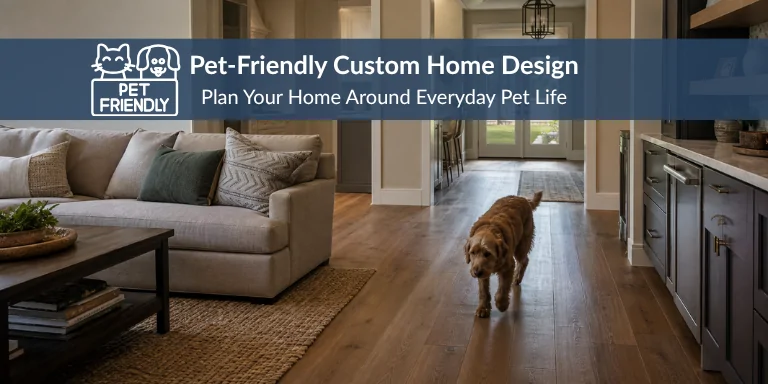
Most people don’t think about where the dog will shake off after a rainy walk until they’re standing in the kitchen with muddy pawprints across new floors. When you’re building from the ground up, you get to solve those problems before they exist. The pets in your household move through a home in predictable ways, and a floor plan that accounts for that from the start feels effortless later.
There’s no single pet-friendly layout. A home built around two large dogs that spend afternoons in the yard looks different from one shaped around indoor cats. The useful starting point is your actual routine, not a checklist of features.
Start With How Your Pets Use the Home
Before the floor plan is finalized, it helps to map how animals actually live in the space. Where do they sleep? Which door do they use to get outside, and how often are they coming back in dirty? Where does the food live, and is the water bowl sitting somewhere it regularly gets in the way?
These answers shape real decisions. If your dogs come and go through the back all day, that entry deserves durable surfaces and a logical path to the yard. If feeding happens in a busy kitchen, we can design a recessed nook so bowls aren’t underfoot. Small observations about daily habits tend to drive the choices that matter most.
Choose Flooring That Handles the Traffic
Flooring is where pet ownership shows up fastest. Nails, moisture, and constant back-and-forth wear down the wrong material quickly, so the question is matching the surface to the room.
A few things worth weighing:
- Scratch resistance in entryways and hallways where claws land hardest.
- Moisture tolerance near doors, water bowls, and any wash area.
- Traction, since older dogs especially struggle on slick surfaces.
- Comfort underfoot in rooms where pets and people actually lounge.
Tile and luxury vinyl products can be practical choices for high-traffic areas, and many homeowners mix materials across the flooring options for custom homes rather than committing to one everywhere. Softer flooring can still make sense in bedrooms; the goal is putting the tough stuff where the wear happens.
Plan a Mudroom and Pet Wash Area
A well-placed mudroom is one of the more genuinely useful things custom planning can offer a pet household. It becomes the buffer between outside and your living space, the spot where paws get wiped and wet dogs get dealt with before they reach the couch.
Position matters more than size. A mudroom connected to the garage or the door your pets actually use does the work; one tucked in an inconvenient corner gets skipped. Built-in storage for towels, leashes, and a spare bag of food keeps the essentials where you need them.
If your household would regularly use one, a built-in pet wash station can be worth considering during construction.. A tiled, low basin with a handheld sprayer spares your back and keeps grooming out of the bathtub. It’s far easier to plumb during construction than to retrofit later.
Connect Indoor Living to Secure Outdoor Space
Outdoor living carries real weight in North Florida, and the yard should be planned alongside the floor plan rather than treated as an afterthought. Where the home opens to the outside determines how naturally pets flow in and out.
Think about a clear, direct path from the living area to a fenced yard, with gates positioned where you’ll actually use them. Secure fencing keeps pets contained without turning the yard into a kennel, and a covered patio gives everyone a shaded spot during warmer months. When we plan outdoor living spaces with pets in mind, the aim is a yard that works for the whole household without disrupting how people move through the home.
Storage, Feeding, and Everyday Safety
Pet clutter accumulates fast. A little dedicated cabinetry, whether a pull-out drawer for supplies or a designated feeding station, keeps leashes and toys from spreading across counters. These are minor square-footage decisions with an outsized effect on how organized a home feels.
Safety is worth folding into planning, too. Secure exterior doors and well-latched gates reduce the chance of an escape. Thoughtful stair and railing design can help with pets that don’t judge open edges well, and it’s worth considering where windows and balconies sit if you have climbers or jumpers. None of this guarantees anything, but each choice quietly lowers risk.
Design for the Years Ahead
A custom home is a long-term commitment, and your pets’ needs will shift. The energetic puppy eventually becomes a dog that appreciates ground-floor sleeping and gentler transitions between surfaces. Easy-clean floors and a practical wash area stay useful across that whole span, which is part of why planning for them early pays off.
Bring It All Together Before Plans Are Final
The advantage of building custom is that these considerations become part of the design instead of awkward fixes bolted on afterward. A mudroom in the right place, flooring matched to real traffic, a yard that connects naturally to the house: these are far simpler to build in than to add.
Sparks Construction has been building homes across North Florida since 2004, and we’ve learned that the details specific to how a family actually lives, pets included, are the ones worth settling early. If you’re planning a custom home in Lake City, Gainesville, or the surrounding area, the best time to talk through these decisions is before your floor plan is locked in. Call us at 386-755-9314 and let’s make sure your new home fits every member of your household.